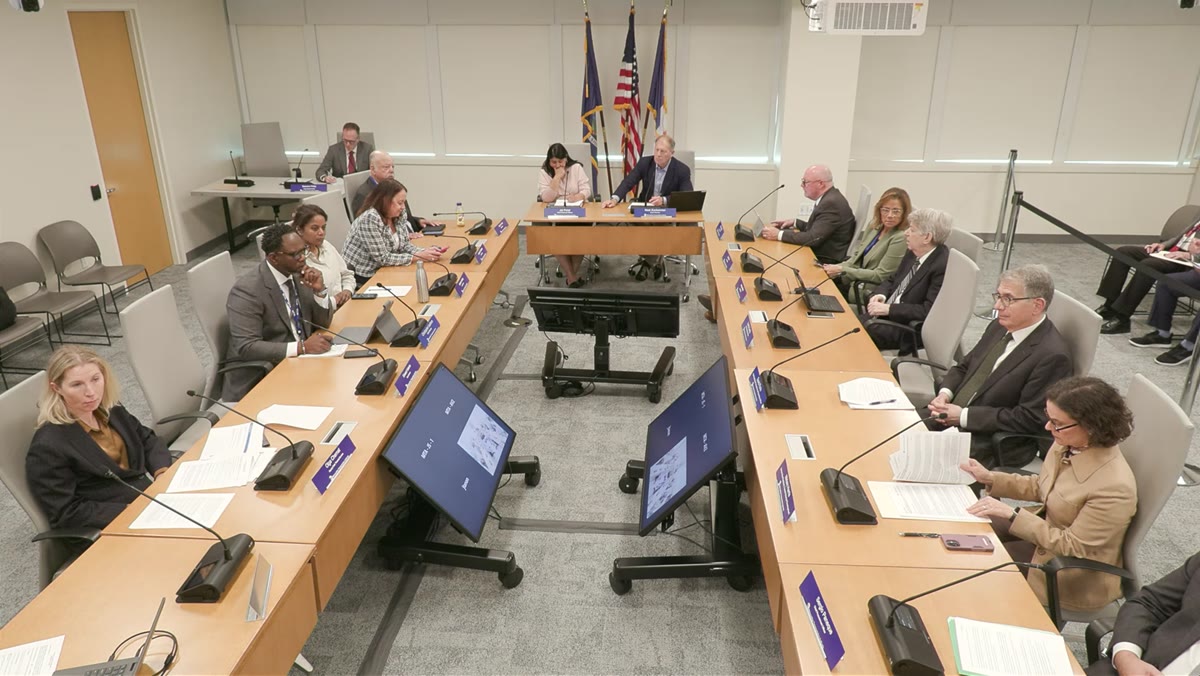
The MTA Board's Finance Committee on Monday approved $38.3 million in contract extensions with Cubic Transportation Systems for the Omni fare system's call center and retail payment network, over objections from several members about the company's performance and cost.
The vote passed with three members in favor, one opposed and two abstentions. The member who voted no said the board has repeatedly asked for a briefing on Cubic's performance and has not received one. "I'm voting no," that member said, adding, "I think it's time that we look for someone else that can do the job that Cuba does."
Another member said he would abstain because five years was too long a commitment. "I'd be much more comfortable with a shorter term," he said, saying he wanted the committee to determine whether some of the work could be moved in-house sooner. Committee Chair Neil Zuckerman said the board should get a transparent plan from staff on moving off the vendor.
Earlier, during public comment, Renee Rizzo told the committee that a board member mocked her grammar during a meeting six months earlier and said she would keep appearing until that person apologizes. "I will register, I will show up, and I will speak at every single MTA board and committee meeting until the board member who ridiculed me, a sick constituent, is identified, held accountable, and issues a formal public apology," she said.
Zuckerman responded directly to her comment, saying any member responsible, including himself, may have spoken "in a feat of a moment of silliness or maybe tiredness." He invited her to email him with specifics. "And if it's my role to apologize, I will," he said.
The committee also heard that MTA operating results through September were $365 million favorable compared with the mid-year forecast, helped in part by $89 million in favorable revenue that included a final FEMA COVID reimbursement. A finance officer said the agency had originally claimed about $750 million from FEMA but received an additional $150 million during the final closeout.
A finance official told the committee the MTA priced $738 million in refunding bonds last week, generating $32 million in present-value savings, or about 4% of the refunded amount.
Zuckerman also read from a state comptroller's report noting that MTA operating costs including health care, pensions and debt are projected to grow 5% over four years while revenue grows about 2.1% over the same period. "That is not a recipe for a good business model," he said.
Staff said MTA bus revenue is running about 8% below forecast, a larger shortfall than the 3% gap on New York City buses, and said they were still looking into why one was running worse than the other.
The committee approved a five-year, $7.3 million contract with Hilti for tools and fastening products and a three-year, $93.8 million contract with MetLife for employee life and disability benefits.
Staff said diesel prices nearly doubled during the Iran conflict, rising from $2.50 to $4.89 per gallon, and that without the MTA's fuel hedging program, costs would run an estimated $126 million above the adopted budget; the program itself was expected to produce about $51 million in offsets by year's end.
The committee also approved a new property acquisition policy, a lease with GNC for retail space at the MTA's headquarters building, a coffee concession lease with a company identified as DKG, and an easement from a water utility in New Rochelle to support the Penn Station Access project. It also approved a long-term lease with Gotham for the Westbury Commons development on a former Long Island Rail Road commuter parking lot. The project will include 184 rental apartments, 19 of them affordable, about 2,000 square feet of retail and 254 parking spaces, with the MTA receiving $2.25 million in upfront rent plus annual base rent of at least $550,000 that rises 12.5% every five years.