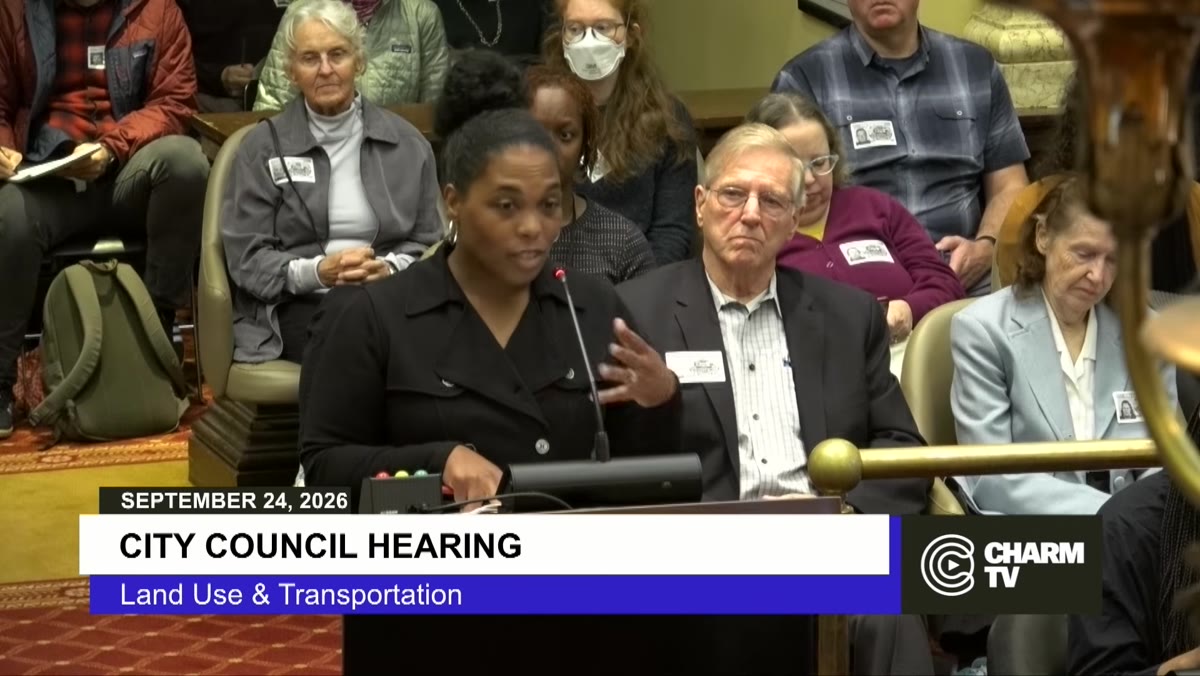
A Baltimore City Council committee on Thursday advanced several zoning bills, including a rezoning of a lot on East Cold Spring Lane tied to a Loyola University parking lot, a rezoning of property on West Baltimore Street, and a contested rezoning of a Waverly lot to open space.
The Waverly lot vote came over objections from an attorney identified as Tilden for the property's owner, who argued the rezoning was improperly introduced and would amount to an unconstitutional taking, citing a $450,000 settlement value placed on a nearby lot in a similar case. A city law department representative warned the bill could be invalidated in court or force the city to pay fair value for the land if challenged.
Councilwoman Odette Ramos said the lot has always been a community space. Vice President Sharon Green Middleton voted for the bill but urged further negotiation between the city and the owner.
The council spent hours on a bill to create a zoning overlay along Harford Road, meant to allow modest housing density increases near the commercial corridor. The bill's sponsor proposed amendments capping height rather than applying full R10 standards, and several residents testified against the bill, citing a lack of an appeals process for neighbors.
"I feel that a change in zoning from R3 single family detached housing to R10 which is the highest density zoning permitted under the zoning code would be a betrayal to those of us that live adjacent to Harford Road," said Wayne Carson, a resident. Another speaker objected to the bill's sponsor chairing the hearing on his own bill.
The committee adopted amendments and voted the Harford Road bill favorable with amendments to be reported to the full council.
The panel then took up a bill on accessory dwelling units, hearing opposition from residents including Douglas Armstrong, who called the measure "malpractice" and said allowing a second unit inside a row house effectively makes it multifamily housing. Councilman Parker said he strongly opposed amendments proposed by Councilman Blanchard.
Blanchard's amendments passed by roll call with the chair, vice chair, Blanchard and Councilwoman Felicia Porter voting yes and Parker and a member named Gray voting no. The full ADU bill then passed favorable with amendments, four in favor to three opposed.
The committee did not vote on a bill from Porter on health equity assessments for data centers, at the request of her office. The Department of Planning said its commission recommended disapproval until a required impact study is complete.
Many residents testified into the night opposed to data centers in the city, citing water use and drought concerns. "Why aren't we just strengthening the moratorium?" asked one speaker, who cited more than 8,400 signatures on a petition to ban data centers.
Andrew Zirkle, representing the Maryland Technology Council, was among the few speakers in support, urging regulation rather than an outright ban and citing jobs and tax revenue. Porter said the bill would give communities more power to stop a data center project than the standard conditional use process, and said the existing moratorium would remain in effect.
"It was on the record yesterday where six data centers are currently in the city of Baltimore right now, honestly unregulated," Porter said. The chair thanked attendees who had been present since 9 a.m. and recessed the hearing without a vote on the data center bill.