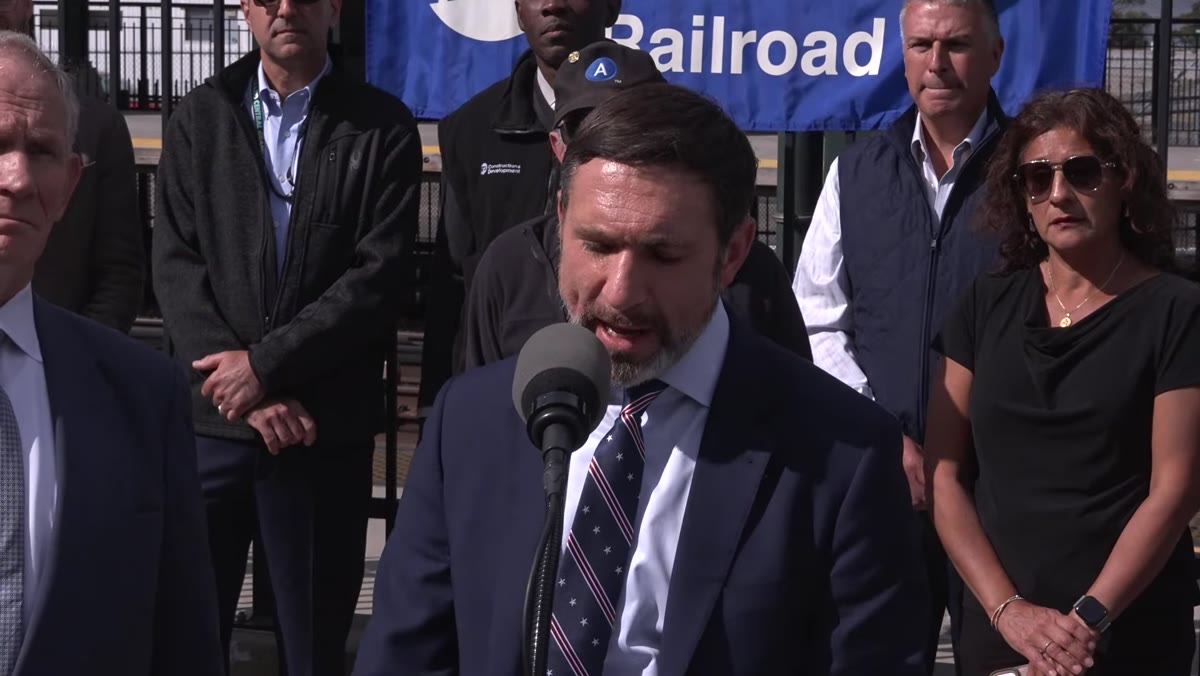
The Metropolitan Transportation Authority announced Wednesday it has awarded a contract for the design of a project to protect the Hudson Line from flooding and mudslides, covering the stretch of track between Spuyten Duyvil in the Bronx and Hastings-on-Hudson.
MTA Chair and CEO Janel Lieber said construction should start in a couple of years, but the agency is ready to begin design work on a segment of track that has experienced flooding and repeated mudslides because of its location between the Hudson River and steep slopes along the railroad right of way.
Lieber said the project will include strengthening retaining walls, expanding culverts along slopes and track, shoreline structure rehabilitation and flood protection measures for tracks.
MTA Construction Development President Jamie Torres Springer said the agency's climate planning team conducted a multi-hazard vulnerability assessment looking at hurricane flooding, heavy rainfall, sea level rise and high heat. He said the 2025-29 capital program includes more than a billion and a half dollars for climate resilience, with $800 million of that going to the Hudson Line.
Torres Springer said more than half of the 75-mile Hudson Line is at risk of flooding during coastal storms, a figure he said will grow to 80% by the 2050s, with about 20% of tracks flooded monthly by mid-century. He said more than 40% of the line sits next to steep slopes vulnerable to landslides, pointing to a 2023 landslide in Scarborough that buried all four tracks for three days.
State Senate Majority Leader Andrea Stewart-Cousins said the project follows years of concern after Hurricane Ida, when she recalled walking with Governor Hochul and seeing neighbors' backyards along Metro-North tracks. She credited Assemblywoman Mary Jane Shimsky with helping secure $800 million for the project.
Justin Vanaschek said the railroad operates 160 trains a day carrying nearly 50,000 customers on the corridor, and that flooding and slope movement are already slowing trains and requiring crews to inspect and repair track.
Lieber also noted the MTA is separately working on a stormwater infrastructure project between Glenwood and Greystone stations, funded through a grant she credited to Stewart-Cousins.